

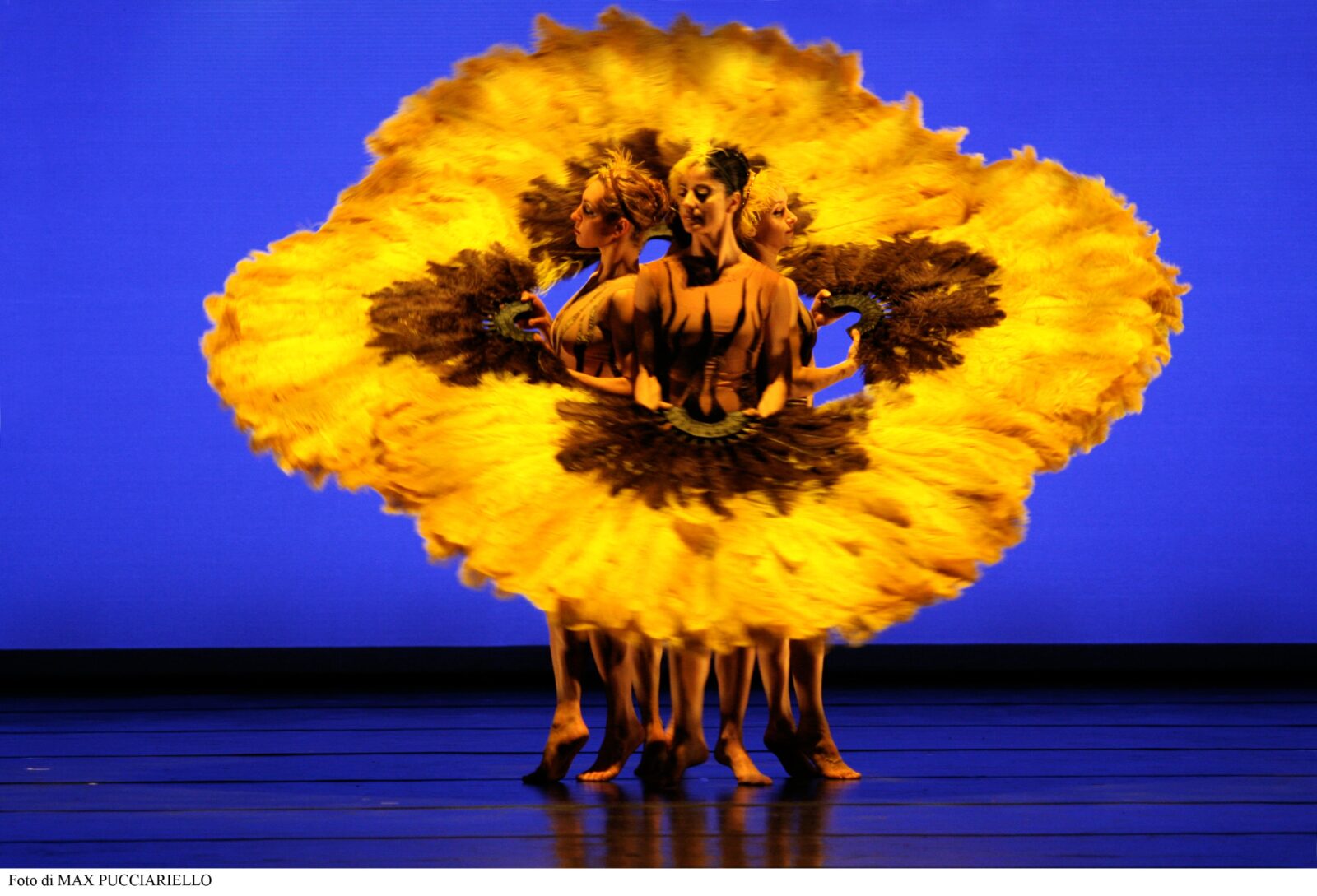

At the Roman Theater in Verona, Moses Pendleton transforms the body into nature and dance into a surprising play on perception
At the Roman Theater in Verona, darkness does not hide—it reveals. That is where the journey into *Botanica – Season 2* begins. The stage lights up, and little by little, what we think we recognize loses its contours. A body is no longer just a body; a shadow ceases to be a shadow; a figure transforms before our very eyes just as we try to make sense of it.
Entering the visionary world of Moses Pendleton and MOMIX means, above all, indulging in the luxury of being curious spectators. Watching, letting yourself be surprised, and—for once—letting go of the need to immediately find an explanation for what’s happening before our eyes.
Set against the backdrop of the Roman Theater, this experience takes on a special power. The ancient stone, the sky, and the darkness of evening seem to naturally extend the stage, creating a dialogue between what has existed for centuries and a theatrical universe in which, by contrast, everything is destined to change.
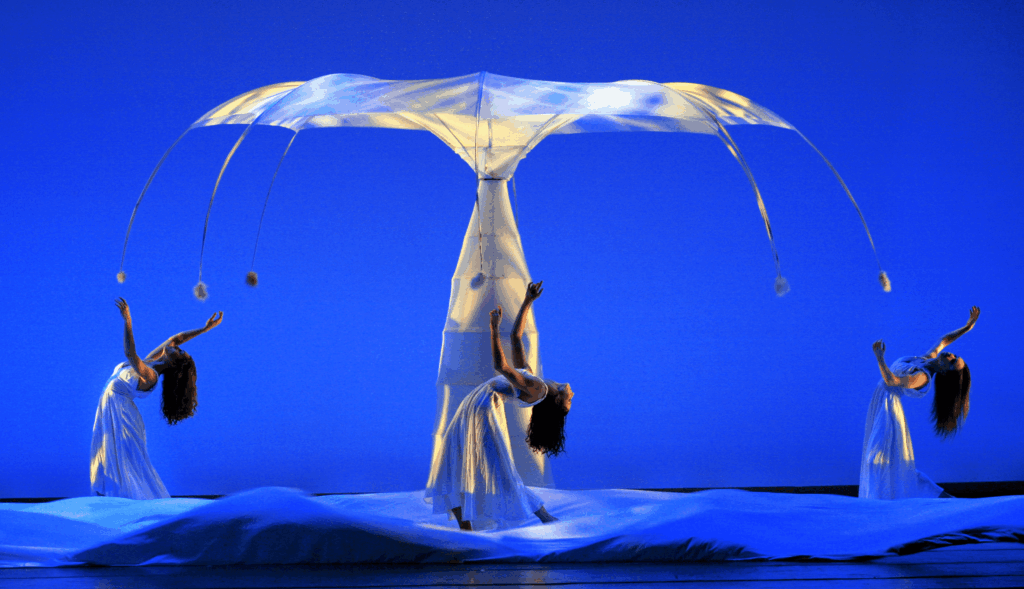
Part of the 78th edition of the Estate Teatrale Veronese, directed by Fabrizio Arcuri, *Botanica – Season 2* builds on the great success of Pendleton’s 2008 production, but it is not merely a revival. It is a new blossoming, enriched by images, projections, and evocative elements that lend the production a surprising contemporary feel.
In *Botanica*, nature is not merely represented—it takes over the stage.
The dancers become flowers, insects, tree trunks, creatures, and plant-like structures. Their bodies intertwine, multiply, disappear, and reappear, until we lose track of where the human being ends and what we are imagining begins.
And this is where the wonder begins.
Bodies, costumes, objects, lights, shadows, and projections blend together in a language that seems to constantly deceive the eye. You find yourself looking at a figure, trying to make sense of it, and a moment later, that same figure has already become something else.
Behind this apparent lightness lies extraordinary physical conditioning. Strength, balance, precision, and control are absolute, yet they never become a show. The technique remains at the service of the image and almost disappears behind it. MOMIX thus manages to make what is by no means natural appear natural.
Pendleton constantly invites us to change our perspective. What is it that we’re looking at? A flower? An animal? A human being?
After a while, you even stop asking yourself that question.
And perhaps that’s exactly when you truly enter the world of *Botanica*.
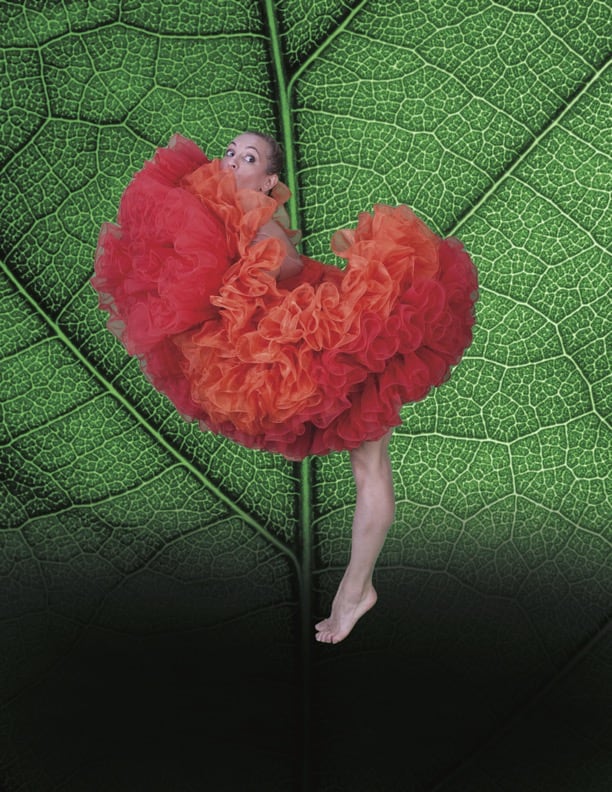
There is no need for a conventional narrative because the images tell the story. Earth, water, air, and light seem to flow through the scene, and nature appears as a force in constant transformation. The human body does not imitate it; it seems to become part of it.
This is where one of the most fascinating aspects of the performance comes to light: we are not merely spectators of nature—we are nature.
And Pendleton manages to convey this without turning the performance into a lecture. There are no proclamations or imposed messages. There is something much more immediate: beauty. A beauty that awakens the senses and reminds us of a connection to the natural world that we all too often forget.
What makes it all even more evocative is the Roman Theater itself. On one side, the constant metamorphosis of the bodies; on the other, the stillness of the stone; above, the sky. Past and present, matter and illusion, solidity and lightness coexist within a single glance.
It’s no surprise that Verona holds a special place in MOMIX’s history. Here, the company’s artistic vision seems to find a natural extension, and *Botanica – Season 2* dialogues perfectly with *(H)Earth of Glass*, the theme of the 2026 Verona Summer Theater Festival, where Earth, fragility, and transformation become artistic material.

After more than forty years of history, what continues to amaze about MOMIX is their ability to still inspire wonder. In an age when we’re inundated with images and special effects, Pendleton manages to capture our attention by drawing on the oldest and most extraordinary tool of all: the human body.
All it takes is a light, a piece of fabric, an object, and a perfectly calibrated movement for what we thought we knew to suddenly take on a whole new identity.
And so, almost without realizing it, we become children again. We observe with curiosity, we wait for the next transformation, we are surprised, and sometimes we smile at the sheer impossibility of understanding how what we’ve just seen could have been created.
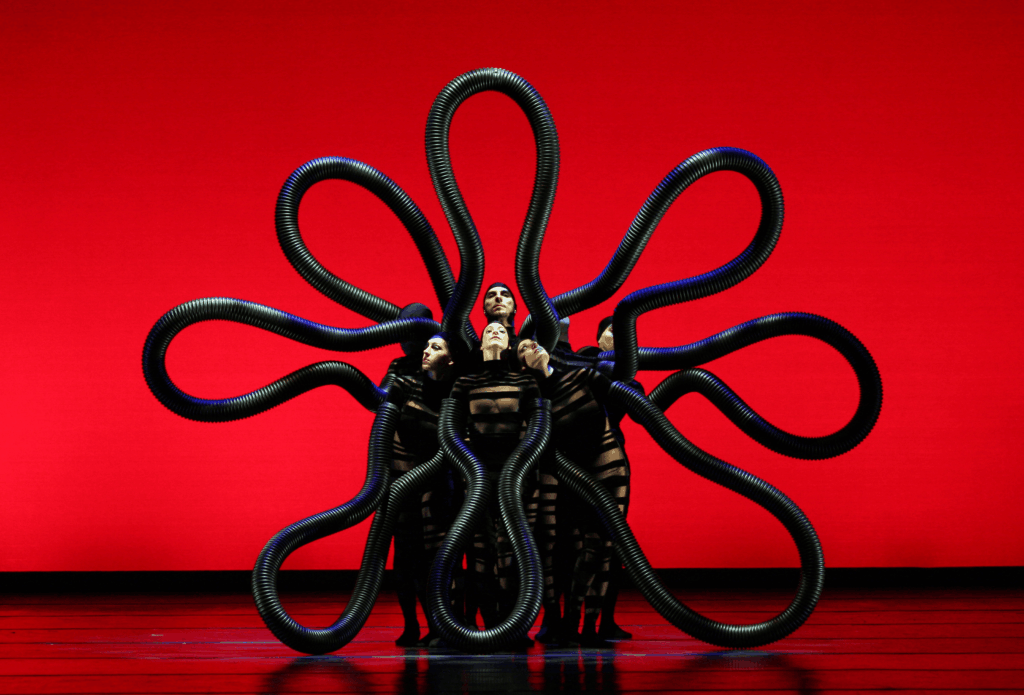
Then the lights come back on. The body becomes a body again, the stone becomes stone again. But the gaze is not quite the same as before.
What remains is the feeling that a human being can transform into a flower, that a shadow can come to life, and that reality, when viewed from a different perspective, can be far less predictable than we imagine.
Moses Pendleton says he wants to leave the audience with “a little less gravity in their step,” and that is precisely the feeling that stays with you as you leave the Roman Theater. Botanica – Season 2 is a journey into nature, the body, and our ability to still marvel: poetry, movement, wonder, and beauty that continue to live on even after the lights go out.
Today, August 8, marks the end of *Botanica – Season 2*’s run in Verona, but MOMIX’s journey doesn’t end here. The magic continues, along with Moses Pendleton’s visionary ability to transform bodies, light, and imagination into ever-new worlds. And the surprises to come will surely continue to thrill us and make us dream, because when you enter the MOMIX universe, the dream doesn’t end with the final round of applause: it remains in the eyes and memories of those who experienced it.