


Venice 83: Ferragamo—Cinema, Fashion, and Memory
Martina Ferragamo brought to Venice a surname that is part of fashion history and a project born from a personal question: how to embrace an important legacy without sacrificing one’s own identity. On September 9, 2026, during the 83rd Venice International Film Festival, the Teatro La Fenice hosted the premiere of “Un passo alla volta” (One Step at a Time), a short film written by the actress in collaboration with Simone Coppo, who also directed it. Presented by Ferragamo and produced by Image Hunters, the film weaves together family memories, cinema, and freedom of choice. Joining the lead actress in the cast are Margherita Buy, Francesco Colella, and Francesco Centorame. For Martina, the screening marked the moment when an intimate work—crafted through research and dialogue—met its audience. “I’m absolutely thrilled to finally be able to share this story,” she said. At the center of the film are Salvatore Ferragamo and Wanda Miletti Ferragamo, but the narrative is told through the eyes of a young woman who chose acting and is now confronting the people who made her present possible.
The Premiere at La Fenice: A Blend of Cinema and Fashion
The screening took place during an invitation-only gala evening, part of the Venice events held during the Film Festival. The event was hosted by Gianni Canova, a film critic and professor. La Fenice welcomed an audience that brought together the worlds of cinema, fashion, and culture—a reflection of a history in which these fields have intersected since the very beginning.
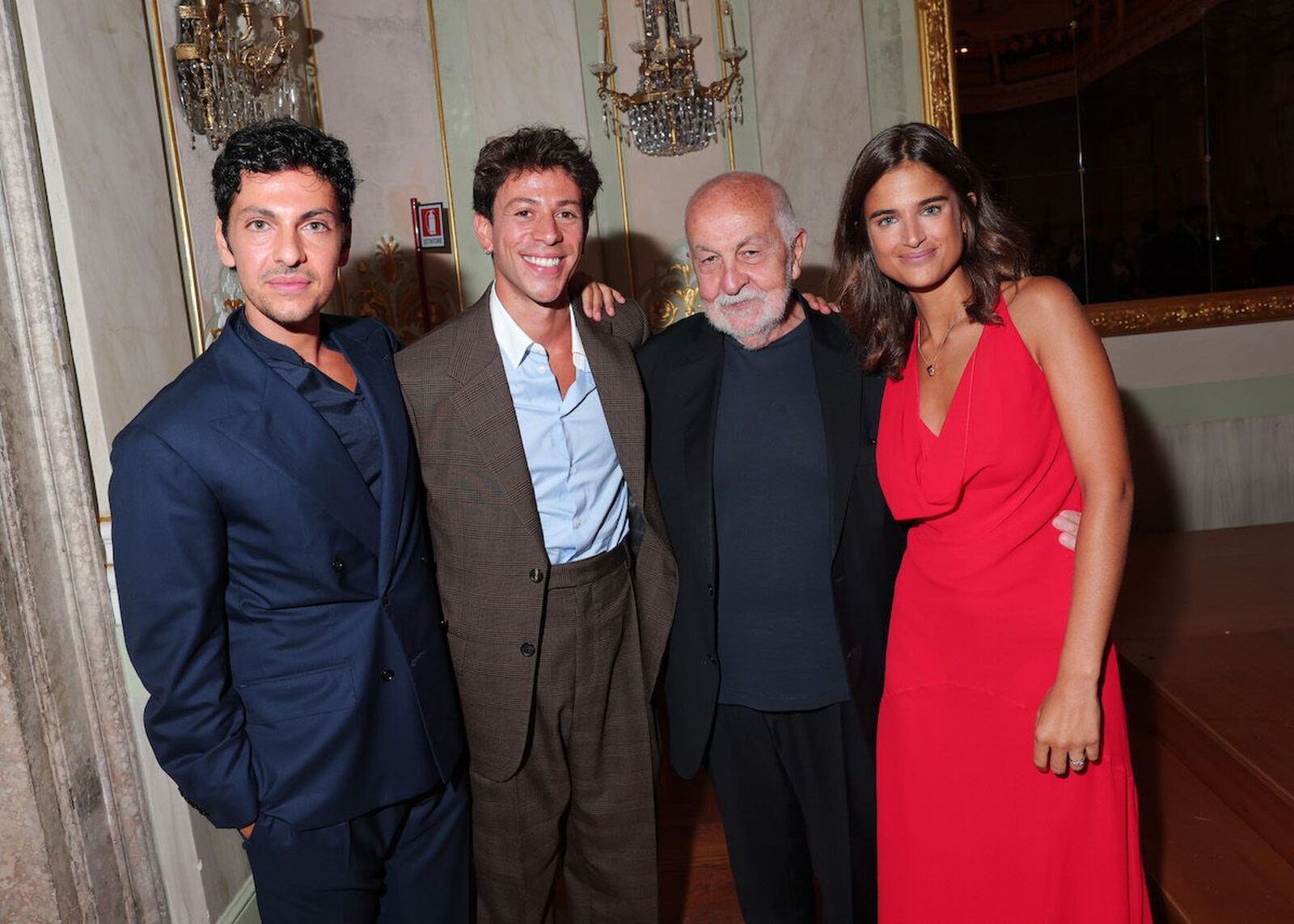
Guests included costume designer Sandy Powell, Francesca Ragazzi, Head of Editorial Content at Vogue Italia, and actresses Greta Scarano, Anna Valle, and Tiziana Rocca. Photos from the presentation captured Simone Coppo, Francesco Centorame, Gianni Canova, and Martina Ferragamo on stage. This glamorous setting provided the backdrop for a discussion about the film, its creation, and the relationship between personal experience and cinematic storytelling.
The presence of a costume designer like Powell and leading figures from the fashion publishing world gave the evening a feel that was consistent with the project. In the world of Ferragamo, clothing and footwear play a role in shaping a character. On screen, they define an era, a gesture, a way of presenting oneself to others. In private life, they preserve memories and become part of the wearer’s story.
Martina plays Martina, and then Wanda
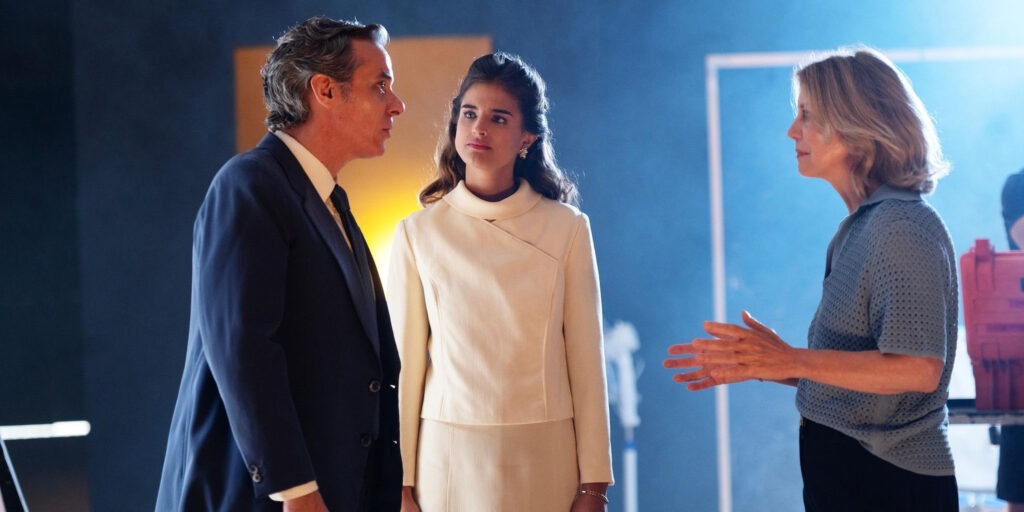
“One Step at a Time” adopts a structure that creates a dialogue between the protagonist’s life and fiction. Martina plays an actress called to the set of a film dedicated to her own family. As filming progresses, memories blend into the present, and the distance between the person and the character narrows. The set becomes a place for her to confront her own origins. What makes this journey even more personal is the role of Wanda, played by her granddaughter.
The cast brings this encounter between eras and identities to life. Margherita Buy plays the director of the film-within-a-film. Francesco Colella plays both Claudio and Matteo, while Francesco Centorame plays Salvatore. Martina appears in the roles of Martina and Wanda. The narrative structure allows the short film to explore the Ferragamo story from a contemporary perspective, focusing on expectations, talent, and the responsibility that comes with making choices.
The cinematic core of the project lies in this overlap. Portraying a family member requires getting close and, at the same time, maintaining a certain distance. A fond memory does not automatically equate to a character. Coppo and Ferragamo’s collaborative screenplay addresses precisely this transition from private experience to a story capable of engaging even those unfamiliar with those events. It is a theme the two authors explored in depth in their interview with Hot Corn during the Venice Film Festival.

Wanda: A Woman Before She Was an Icon
The film focuses on Wanda Miletti Ferragamo, her strength, and her decision to carry on her husband’s work. To portray her, Martina sought a different relationship from the one she had known as her niece. “I tried to see her first and foremost as a woman,” she explained to Vogue Italia. The goal was to understand her humanity, her choices, her pain, and her faith. She describes her as “an extraordinary Italian example of women’s emancipation.”
After Salvatore’s death in 1960, Wanda had to cope with her grief, raise six children, and take over the company. In interviews about the short film, Martina also recalls the approximately 700 employees who depended on that project. The story thus shifts the focus to a leading figure in Italian fashion whose entrepreneurial vision deserves recognition in its own right, separate from the founder’s fame.
The history documented by the Ferragamo Museum brings her work to life. Wanda oversaw product development, studied markets, evaluated store locations, and oversaw the training of sales staff. With the help of her children and colleagues, she guided the company’s expansion into new sectors. Behind the brand’s prestige lay day-to-day decisions, organization, and a focus on people.
Coppo summed up the bond between Salvatore and Wanda with one phrase: “A very modern fairy tale.” In his reflections on the film, the director emphasized how the memory of Salvatore’s talent risks overshadowing his wife’s role. The short film recovers this part of the story and presents it to a new generation.
The Memories That Remain
The relationship between Martina and Wanda is also evident in an anecdote shared with CorriereTv. The grandmother had had small silver dolls made for her grandchildren, each with a weight at the base that allowed them to sway and return to their original position. It was a tangible way to convey a lesson: “The important thing is to always get back on track; balance is essential.” Martina cherishes that memory as a guiding principle to apply to her own choices.
It’s a detail that brings Wanda closer to the reader. Before we see the businesswoman, we see a grandmother searching for an object that will help her teach her grandchildren something about life. The value of family memories is also conveyed through this—through a gift, a conversation, or a piece of advice that takes on greater meaning over the years.
Martina learned about her family’s history through the stories told by her father, uncles, and grandmother. She became aware of her family name’s notoriety early on, as early as elementary school, through questions from others. Today, that awareness informs her work, along with a desire to give a personal direction to what she has inherited. She shared a phrase she often repeats with D di Repubblica: “Don’t rush and don’t waste time.” It’s also a key to understanding the title of her short film, which encourages respecting the natural pace of growth without shying away from making decisions.
From Hollywood to Venice

The Venice presentation reconnected Ferragamo with a relationship with cinema that dates back to the early 20th century. Salvatore emigrated to the United States in 1915 and opened his store in Hollywood in 1923, across from Grauman’s Egyptian Theatre. His work for film productions and their leading actors contributed to his success. His creations graced films, theatrical productions, and ballets, combining aesthetic innovation with an expert understanding of fit.
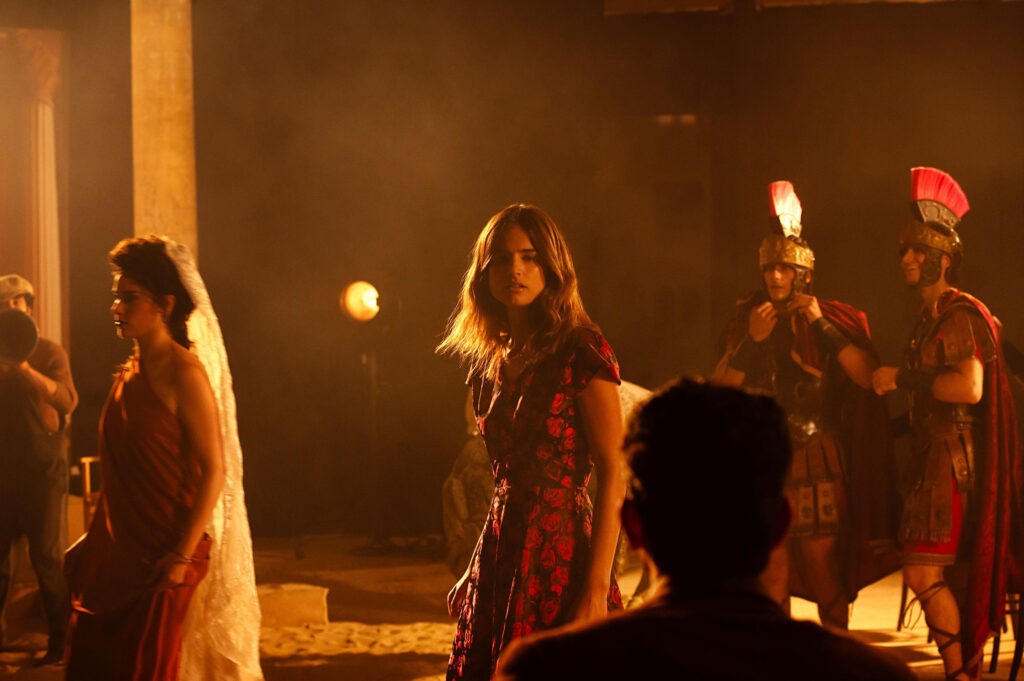
In the short film, this connection serves as the starting point for a reflection on legacy. The story also draws on Cecil B. DeMille’s *King of Kings* and Salvatore’s work in Hollywood. Generations later, Martina returns to the cinema as an actress, choosing a profession that is rooted in the origins of the Ferragamo name and, at the same time, in her own aspirations.
Centorame, who plays Salvatore, has drawn a specific lesson from the project: “I’ve learned to pay attention to detail.” This statement links the work on set to the culture of craftsmanship evoked by the film. The precision of a gesture and attention to detail contribute to a character’s believability, just as they do to the quality of an object.
Red on the carpet, white at the finish line
Fashion also played a role in Martina’s Venetian debut through her wardrobe choices. On the red carpet, the actress wore Ferragamo: a long, flowing red dress with sinuous lines and a soft neckline, paired with understated jewelry. For her arrival at the Lido, however, she chose a white ensemble from the Pre-Fall 2026 collection designed by Maximilian Davis, featuring balloon pants, a short-sleeved blouse with a V-neck, two black ties at the waist, and cream-colored shoes and a handbag.
Two looks that accompanied different moments of the day and highlighted the relationship between the protagonist and the fashion house. In the context of this project, wearing Ferragamo took on a personal meaning: the brand is part of her history, while cinema provides her with the tools to tell that story.
A Career as an Actress
At 28, with a degree in psychology from London and training and work experience in New York, Martina has carved out her own path before taking on this role. She lives in Rome, made her Off-Broadway debut as the lead in “Sunbreak,” starred in the short film “EH,” directed by Coppo, and has just wrapped filming on the second season of “Libera,” directed by Gianluca Mazzella.
“One Step at a Time” thus represents a convergence between her chosen profession and the legacy she inherited. At La Fenice, the glamour of the premiere complemented a story woven from responsibility and affection. Martina brought her grandmother to life and shared her own journey of coming to terms with that past. Cinema allowed her to transform memories into a character, revealing—behind the name Ferragamo—the life of a woman who had to learn to run a company while rebuilding her own future.