

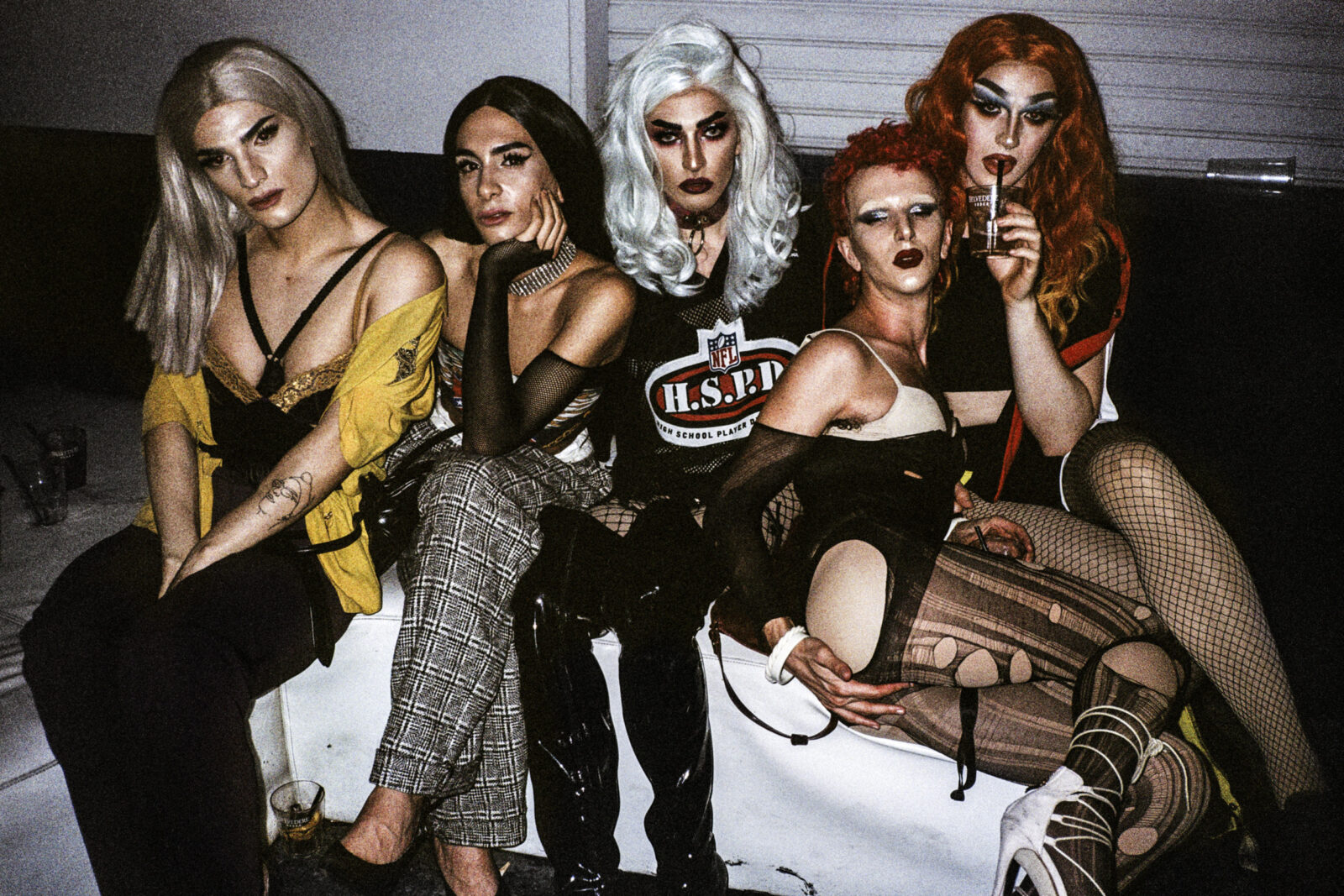

Through 180 photographs, Stefano Righi captures Milan’s underground scene, its people, and the freedom to be oneself.
There are nights that end at dawn and others that, almost without us realizing it, become part of a city’s memory. Stefano Righi has been photographing them for over twenty years, immersing himself in that nocturnal Milan that has found a space for freedom, experimentation, and a sense of belonging in its clubs. From this long journey comes *Patriots*, a book published by Skira, edited by Claudia Carretti, with a text by Sara Sozzani Maino and an introduction by the photographer himself.
The book, with 208 pages and 180 images, focuses primarily on the last decade of Righi’s work and offers an insider’s view of a scene that could hardly be conveyed in the same way by someone who has merely observed it. Plastic, Magazzini Generali, Botox, Just Cavalli, and Don’t Tell Mama are just some of the places captured by his lens, but to reduce *Patriots* to a mere snapshot of Milan’s nightlife would be to scratch only the surface.
Righi photographs the night, of course, but what he’s really looking for are the people who inhabit it.
Faces, bodies, clothes, gestures, glances, and relationships become fragments of personal stories. In his photographs, excess can coexist with fragility; theatricality suddenly gives way to intimacy; and the most striking image can reveal, a moment later, something extremely vulnerable. There are no characters cast to act out a scene: there are real men and women, encountered in clubs, at concerts, in private apartments, even in bathrooms. Righi enters those spaces, experiences them, and only then photographs them.
It is this immediacy that gives the images a distinctive quality. They do not seem to ask for permission to be perfect—and, most likely, they do not want to be.
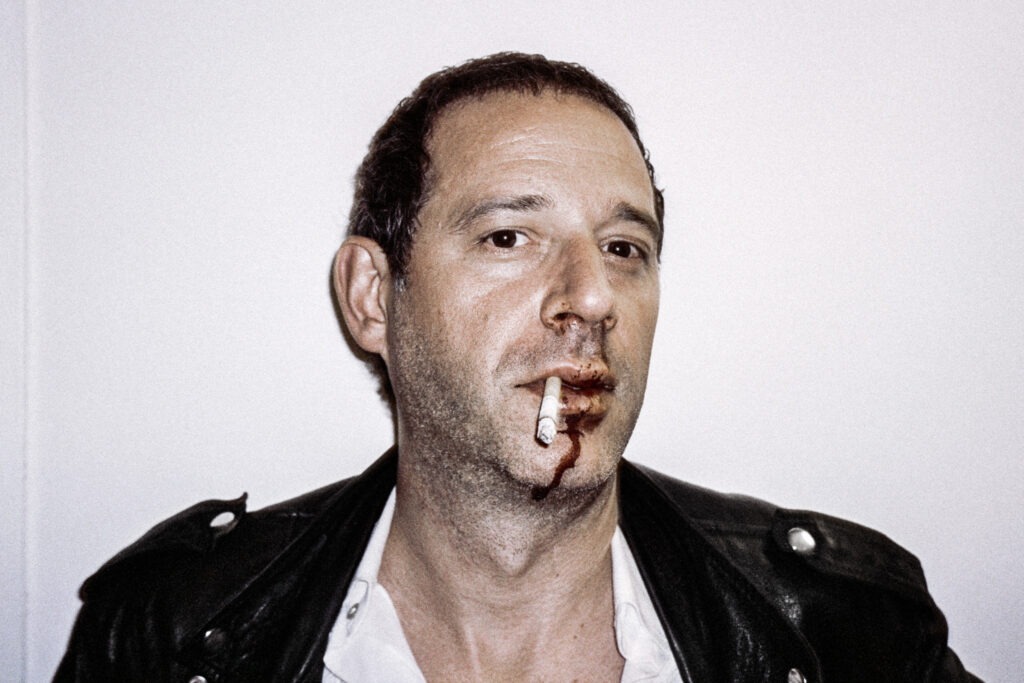
Working primarily with 35mm film and analog cameras, the photographer embraces blurriness, direct flash, and unstable framing as elements of his own visual language. Imperfection is not eliminated because it is part of the lived moment. Photography thus preserves something of the instinct from which it was born: a face suddenly illuminated, a body captured in motion, a glance that lasts just long enough to be seen and then disappears.
Born in Johannesburg in 1980, Righi turned to photography after initially working as a producer in the punk-rock scene. That transition from music to imagery seems less of a leap than it might appear. In both worlds, he finds energy, freedom of expression, and, above all, people who choose to reveal themselves without necessarily conforming to a predefined model.
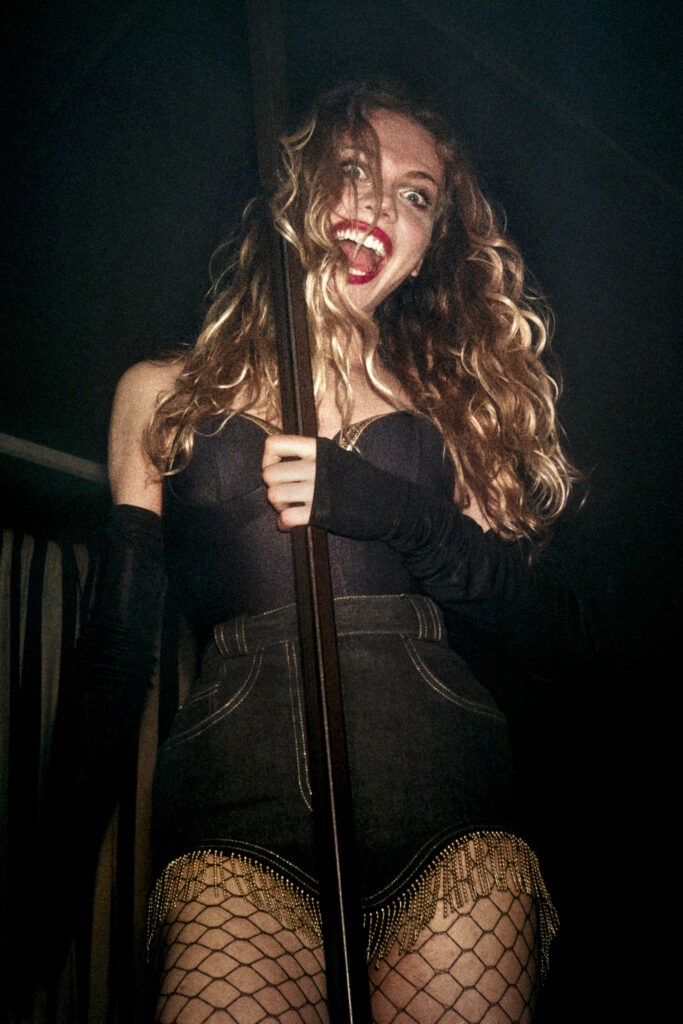
Over the years, his lens has chronicled a segment of Milan’s underground culture as it has evolved, blended with other influences, and developed new codes. And it is precisely the passage of time that now lends those photographs an added value. What began as a narrative of the present has also become a testament to an era, to places, and above all, to a community.
Fashion inevitably permeates these images, but not as a stylistic exercise. A dress, an accessory, makeup, or an aesthetic choice become ways of asserting one’s identity. The body itself becomes a language. From this perspective, the club isn’t simply a place to spend the night, but a space in which to experiment with who you are—or perhaps who you want to be.
This is where *Patriots* goes beyond the story of clubbing. Look at them today—those photographs also speak to a Milan that was able to offer places where differences, eccentricities, and sensibilities could come together. A city observed as the lights changed, conventions loosened, and something even harder to capture remained before the lens: spontaneity.
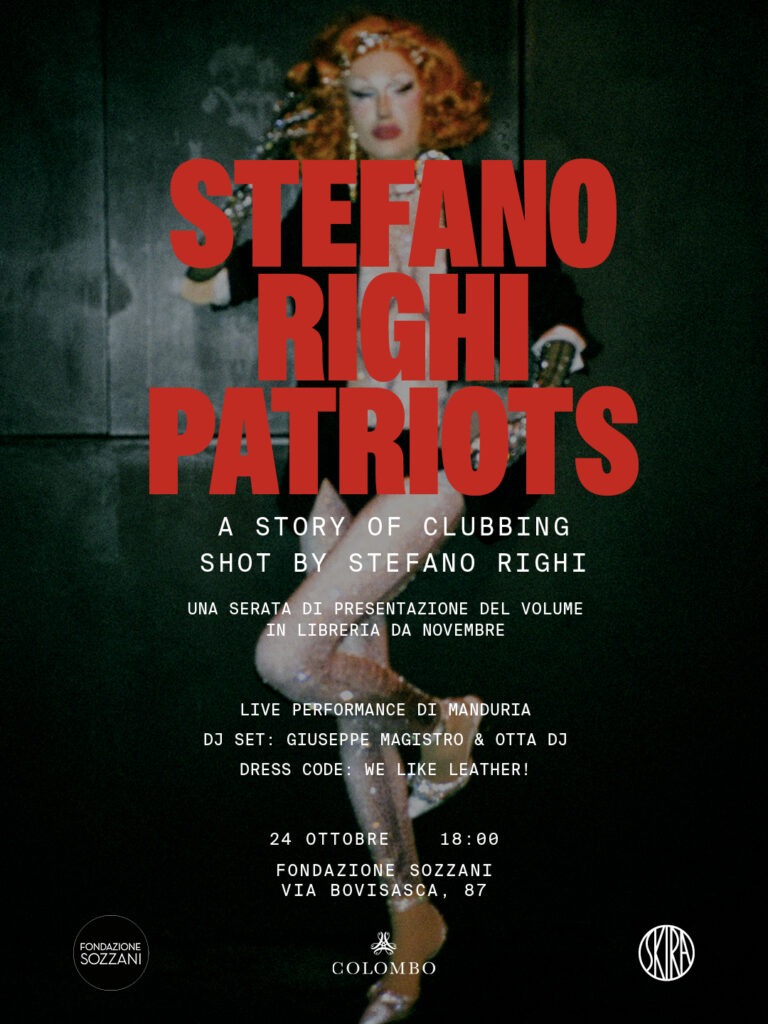
The project will come to the Sozzani Foundation in Milan on Saturday, October 24, and Sunday, October 25, 2026, with two evenings dedicated to photography, culture, and music. Stefano Righi will be in conversation with Sara Sozzani Maino, Creative Director of the Sozzani Foundation, to explore Patriots and clubbing culture, while Manduria’s music will interact with his visual universe through live performances and DJ sets.
The book will be available in bookstores starting in the fall of 2026.

Years later, those photographs have inevitably taken on a new meaning. They don’t just show where people went, what they wore, or how they spent their nights. They capture the encounters, personalities, freedom, excesses, and fragility of people who, at that moment, weren’t thinking about becoming part of a record of Milan’s underground scene.
They were simply living their lives.
And perhaps that is why *Patriots* manages to be so direct: because Stefano Righi didn’t try to explain that night. He was there, along with the others, and photographed it as it happened.
Photo credit: Stefano Righi