



Tom Holland returns as Spider-Man in a more mature installment, exploring themes of loneliness, loss, and the need to start over
What remains of a superhero when he is stripped of his friends, his love, his family, and even the memory of his existence in the minds of the people who mattered most to him?
This is probably the best place to start when discussing *Spider-Man: Brand New Day*. Because this time, the hardest web to weave isn’t the one between New York’s skyscrapers, but the one that’s supposed to hold Peter Parker’s life together.
We left him at the end of *No Way Home* more alone than ever before. Doctor Strange’s spell had erased Peter from everyone’s memory, including Ned and MJ. It was a painful choice that left Spider-Man in the world, but Peter Parker without his world.
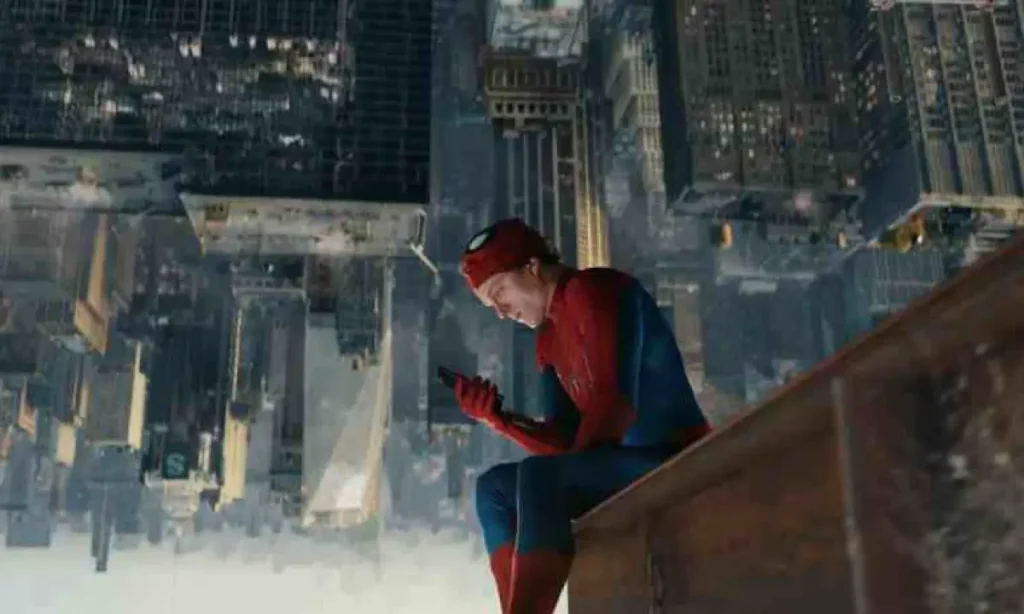
Now we see him as a more mature man. He continues to protect New York, takes on criminals, and soars through the city from above, but he watches from afar as the lives of the people he loves unfold—people who no longer know who he is. And perhaps that’s the most striking part of all: still being connected to someone who, quite simply, no longer remembers us.

Destin Daniel Cretton thus shifts the tone of the story. Of course, he doesn’t shy away from action, but he seems primarily interested in the man behind the mask. And it’s a choice that also allows Tom Holland to portray a Peter who is different from the one we saw in the early films.
The young boy who sought Tony Stark’s approval has grown up. He has experienced pain, responsibility, loss, and above all, the price of his own choices. That adolescent carefree attitude that characterized the early films has given way to something more complex. The irony remains—because Spider-Man without irony would lose part of his identity—but it is no longer the refuge behind which he hides every emotion.
This time, the film openly addresses loneliness, grief, and abandonment. And it works best when it allows Peter to be vulnerable. Because you can save an entire city and, at the same time, not know how to save yourself.
Of course, the world around him doesn’t stand still. The arrival of a mysterious girl capable of mentally controlling people introduces a new threat that draws Damage Control into the fray and drags Peter back into that web of characters and connections that is now part of the Marvel Cinematic Universe’s DNA.
We see Mark Ruffalo’s Hulk, Yelena Belova played by Florence Pugh, and Jon Bernthal’s Punisher, but the presence of so many familiar faces doesn’t quite manage to steal the spotlight entirely from Peter. And that was a real risk, because when a cinematic universe becomes this vast, it’s easy for the protagonist to end up feeling like a guest in his own movie.
Here, however, Peter remains the heart of the story.
Also noteworthy is the arrival of Sadie Sink, who brings with her a character about whom it’s best not to give too much away. There’s something unsettling about her presence, and her performance fits well with the more mature tone chosen for this installment. Zendaya, too—even with a different role than in the past—still carries significant emotional weight. MJ doesn’t remember Peter, but for Peter, MJ inevitably continues to exist.
And it is one of the most painful contradictions in history.

Cretton also does a great job with the film’s other main protagonist: New York. The city isn’t just a backdrop against which Spider-Man can swing. It once again becomes a living organism, made up of people, streets, police officers, and passersby who look up at the sky.
The action sequences make the most of that verticality that should come naturally to Spider-Man. The camera follows the bodies, changes its angle, plays with heights, and at times recreates that sensation of vertigo that, after so many movies, we thought we knew by heart.
And yet it still manages to surprise.

Perhaps this is precisely where *Brand New Day* addresses, at least in part, that famous “superhero fatigue” that’s been talked about for quite some time now. Is the audience really tired of superheroes, or is it simply tired of seeing the same movie over and over again with different costumes?
Spider-Man continues to have something on his side that’s hard to replicate: before he’s a superhero, he’s Peter Parker.
He makes mistakes, suffers, loves, loses people, and makes decisions whose consequences he must bear. He has extraordinary powers, but his feelings are incredibly ordinary. And that’s probably why, after so many years and so many cinematic portrayals, we continue to follow him.
The film isn’t without its weaker moments. In the final act, it loses some of the focus on Peter that had made the earlier parts so compelling, and some of the narrative devices feel less natural. But at least it avoids relying entirely on the usual escalation that demands an ever-bigger enemy and a final battle that’s even louder than the last.
In the end, it’s mostly Peter who remains. A boy who has become a man, continuing to move through a city that knows Spider-Man, while no one knows him anymore.
And it’s a much more powerful image than many special effects.
“Brand New Day ” means “a new day.” But this time, starting over doesn’t mean erasing what happened. It means learning to carry it with us without letting it become the only thing that defines us.
Tom Holland is no longer just the boy we watched become Spider-Man. He is a Peter Parker who is learning—perhaps for the first time—just how hard it is to grow up when, beneath the mask, you can no longer hide from yourself.